
Last Updated: November 21, 2026
Quick Summary
Pair mexican seafood with wine by matching the bottle to how the fish is cooked, not to the word seafood. Raw dishes like ceviche suit dry, high-acid whites such as Albariño or Sauvignon Blanc, while fried fish tacos want a rosé, fuller Chenin Blanc, or dry sparkling wine.
- Ask how the fish is cooked, what the sauce is, and how much chile heat before choosing a bottle.
- Avoid oaky Chardonnay with ceviche because the oak fights the lime and tastes bitter.
- A dry rosé is the safest single bottle for a shared table of fried and grilled tacos.
- Serve light reds like young Grenache or Pinot Noir slightly chilled with grilled fish and shrimp.
- Drop alcohol by roughly one percentage point per step up in chile heat and favor fruit over oak.
Table of Contents
- Start With the Preparation, Not the Wine List
- Wine Pairing for Mexican Ceviche: Acid Meets Acid
- Wine With Fish Tacos: Match the Batter and the Salsa
- The Best White Wine With Mexican Seafood
- The Best Red Wine With Mexican Seafood (Yes, It Works)
- Pair by Salsa and Chile, Not Just by Fish
- Budget Bottles, Substitutions and No-Alcohol Options
- Order the Catch and Let Us Match the Pour
- Frequently Asked Questions
Start With the Preparation, Not the Wine List
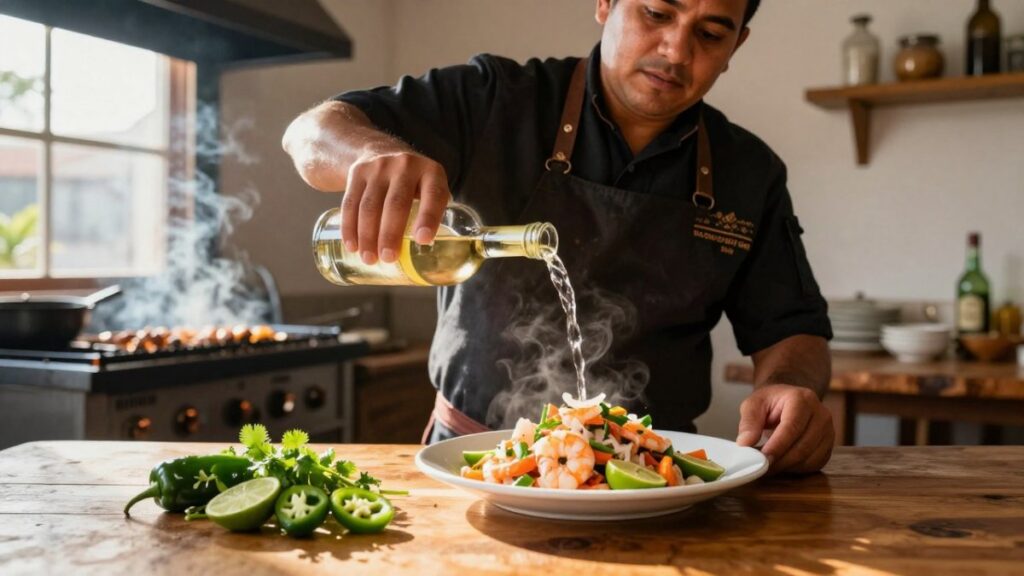
How to pair Mexican seafood with wine comes down to one rule: match the bottle to how the fish is cooked, not to the word “seafood” on the menu. A crisp, dry white handles a squeeze of lime and a raw shrimp. A fried fish taco wants something with a little more body. At El Calamar Restaurant, we serve mariscos and grilled favorites, and the plate in front of you is a good place to start when choosing a glass.
The Michelin Guide’s notes on pairing wine with Mexican food make the same point: raw seafood dishes such as ceviche suit white or rosé wines, while richer, cooked plates leave more room to play.
The Three Questions That Decide Your Bottle
Ask these before you open anything:
- How is it cooked? Raw, fried, grilled, or simmered in broth.
- What is the sauce? A bright lime marinade, a smoky salsa, or a creamy one.
- How much heat? Mild, medium, or full chile burn.
Answer those three and the wine list shrinks fast. Skip them and you are guessing.
Wine Pairing for Mexican Ceviche: Acid Meets Acid
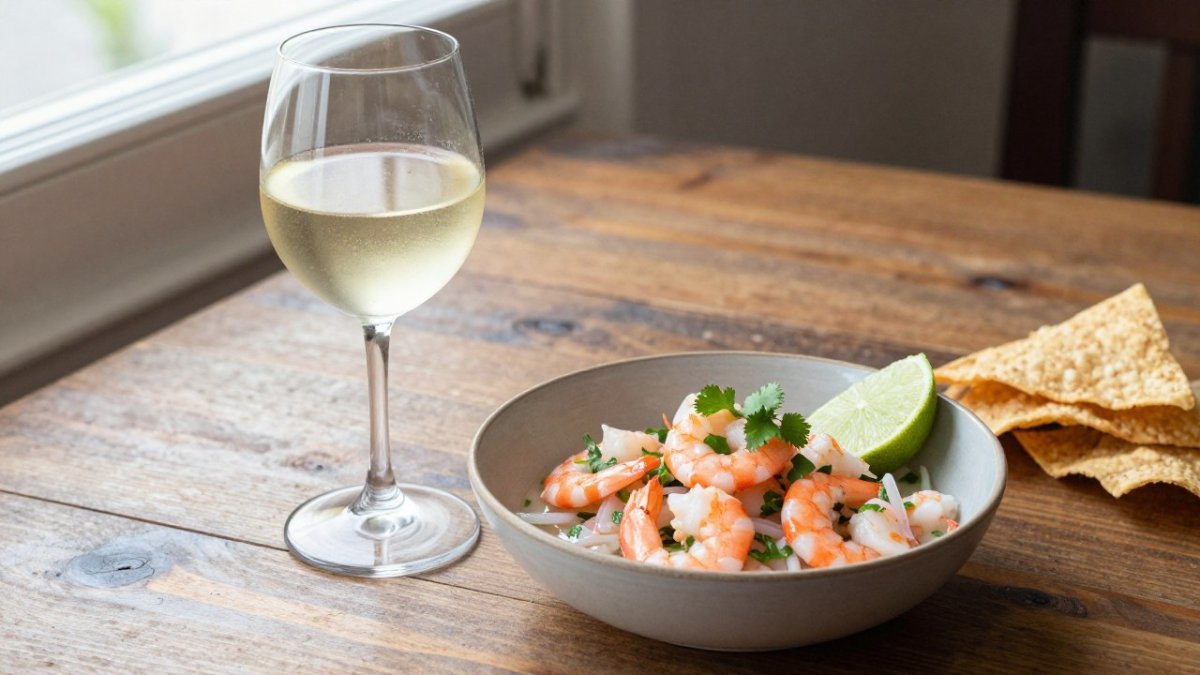
The best wine pairing for Mexican ceviche is a dry, high-acid white with citrus notes. Ceviche is fish cured in lime juice, so the dish already carries sharp acidity. A wine with matching zip keeps pace instead of tasting flat beside it.
Albariño and Other Coastal Whites
Albariño is a popular pick here. It is a coastal white from Spain with bright lime and green apple flavors that echo the cure. Sauvignon Blanc also works well, especially with cilantro and green herbs in the mix.
A common mistake is reaching for an oaky Chardonnay. The oak fights the lime and leaves a bitter edge. Keep the wine lean and the ceviche sings.
Wine With Fish Tacos: Match the Batter and the Salsa
Wine with fish tacos depends on the shell, the batter, and the salsa more than the fish itself. A battered, fried taco is rich and crunchy, so it needs a wine with enough body and acid to cut the oil. A grilled taco is lighter and takes a lighter pour. The tortilla matters too: a soft corn tortilla brings a toasted, earthy note that can flatten a very delicate white, while a flour tortilla is neutral and lets the wine lead.
Match the Batter First
- Beer-battered or tempura-fried fish: the crust is heavy and oily, so reach for a rosé, a fuller Chenin Blanc, or a dry sparkling wine. The bubbles and acid scrape the palate clean between bites.
- Cornmeal-crusted or pan-fried fish: a medium-weight white such as Pinot Grigio or a dry Riesling has enough texture to stand up without overwhelming the crust.
- Grilled or blackened fish: a lean, high-acid white such as Albariño or Sauvignon Blanc keeps the char from tasting bitter.
- Smoked fish or smoked marlin tacos: a dry rosé or a light, chillable red handles the smoke without turning metallic.
Then Match the Salsa and Crema
The salsa on top often decides the bottle more than the fish does. A bright pico de gallo or salsa verde is tart and herbal, so it loves Sauvignon Blanc. A creamy chipotle crema or a heavy drizzle of crema brings fat and smoke, which calls for a rosé with soft tannins or a lightly oaked white. A mango or pineapple salsa adds sweetness, so a dry Riesling with a touch of fruit keeps the plate from tasting cloying.
A common pattern is to order one bottle for the whole table and then discover the fried taco and the grilled taco want different wines. If you are sharing, a dry rosé is the safest single bottle because it has the body for fried fish and the acidity for grilled fish and citrus salsas.
Watch out: a heavily oaked Chardonnay next to a beer-battered taco can taste bitter and woody, because the oak tannins and the fry oil fight each other on the palate.
The Wine Spectator feature on seafood and wine points out that acidity can sharpen a seafood dish’s salinity while texture carries the match. That is exactly why a crisp wine works with a fried taco: the acid slices through the batter, and the body stands up to the crunch.
The Best White Wine With Mexican Seafood
The best white wine with Mexican seafood is a dry, crisp white with vibrant acidity and no heavy oak. Four styles cover nearly every plate on a mariscos menu:
| Wine | Best For | Why It Works |
|---|---|---|
| Albariño | Ceviche, oysters, shrimp | Citrus notes echo the lime cure |
| Sauvignon Blanc | Ceviche, herb-heavy dishes | Green herbs and bright acid |
| Dry Riesling | Spicy shrimp, chile-forward plates | Fruit-forward, low alcohol, tames heat |
| Pinot Grigio | Grilled fish, lighter tacos | Light body, clean finish |
Riesling deserves a special mention. Its fruit-forward profile and lower alcohol make it one of the few wines that can douse the heat of a chile without losing the food’s flavor. Serve it dry, not sweet.
The Best Red Wine With Mexican Seafood (Yes, It Works)
The best red wine with Mexican seafood is a light red with soft tannins, served slightly chilled. Big, tannic reds overwhelm delicate fish. Light ones do not.
- Grilled fish and shrimp: a young Grenache or a light Pinot Noir
- Seafood in smoky salsa: a chillable red with low tannin
- Avoid: cabernet, syrah, and anything heavily oaked
A common mistake is assuming red is off the table entirely. It is not. Chill a light red for fifteen minutes and it pairs beautifully with grilled octopus or a charred fish fillet.
Pair by Salsa and Chile, Not Just by Fish
The salsa on the plate often matters more than the fish under it, and the chile in that salsa decides how much fruit and how little alcohol your wine needs. This is the part most pairing guides skip: they treat “spicy” as one setting, when a jalapeño, a chipotle, and a habanero pull a dish in three different directions.
Pair by Salsa Type
- Salsa verde (tomatillo, green chile, cilantro): tart and herbal, so it loves Sauvignon Blanc or a dry Riesling. The green acidity in the wine echoes the tomatillo instead of fighting it.
- Pico de gallo (tomato, onion, lime, serrano): bright and juicy, so a dry rosé or a crisp Albariño keeps the tomato from tasting flat.
- Salsa roja (tomato, dried chile, garlic): deeper and slightly sweet, so a fruit-forward red such as a young Grenache or a chillable Pinot Noir works with grilled fish.
- Chipotle or morita salsa (smoked jalapeño): smoky and rich, so a dry rosé or a lightly oaked white balances the smoke without adding more of it.
- Crema and creamy sauces: fat and dairy soften heat, so a wine with a little weight, such as a fuller Chenin Blanc or a soft rosé, holds up better than a thin, tart white.
Pair by Chile Heat
Capsaicin, the compound that makes chiles hot, amplifies the burn of high-alcohol wine. Lower-alcohol, fruit-forward bottles cool the palate instead of fueling the fire. A useful rule of thumb is to drop the alcohol by roughly one percentage point for every step up in heat, and to favor fruit over oak.
- Mild (poblano, Anaheim): almost any dry white works; a Sauvignon Blanc or Pinot Grigio is plenty.
- Medium (jalapeño, serrano): dry Riesling or a dry rosé, both with good fruit and moderate alcohol.
- Hot (habanero, chile de árbol): off-dry Riesling or a fruit-forward white with lower alcohol; the touch of sweetness coats the palate and blunts the burn.
- Smoky heat (chipotle, morita): a dry rosé or a light red with low tannin, because tannin plus smoke reads as harsh.
Watch out: a high-alcohol Zinfandel or a big Cabernet next to a habanero salsa will make the burn feel sharper, not softer, because alcohol spreads the capsaicin across the palate.
When in doubt, go lower on alcohol and higher on fruit, and let the salsa, not the fish, pick the bottle.
Budget Bottles, Substitutions and No-Alcohol Options
You do not need a pricey bottle to eat well. The USDA’s Dietary Guidelines for Americans remind drinkers to keep alcohol moderate, so a good bottle shared at the table beats a fancy one poured alone.
Budget-friendly picks to look for at your local wine shop:
- Albariño: look for bottles from Rías Baixas
- Everyday Sauvignon Blanc: New Zealand or Chile both deliver
- Value dry Riesling: German or Washington State bottlings
No-alcohol options work too. A sparkling water with lime, a tart hibiscus tea, or a non-alcoholic white with good acidity all stand up to ceviche and fish tacos. The point is balance, not the label.
Order the Catch and Let Us Match the Pour
Pairing wine with Mexican seafood is easier when someone else does the matching. At El Calamar Restaurant, we hand-pick our catch and make every salsa and marinade from scratch daily, so the plate and the pour are built to work together. You can book a table and let our team match the wine to your dish, whether you order the ceviche, the fish tacos, or a molcajete built for the whole family.
The next time you sit down to mariscos, skip the guesswork. Let the preparation, the salsa, and the chile heat point you to the right glass. Get started with El Calamar Restaurant and enjoy fresh seafood with a wine that fits, backed by our hand-picked catch, scratch-made salsas, and a welcoming table for family and friends.
Frequently Asked Questions
Does Mexican seafood pair well with wine?
Yes. Mexican seafood leans on lime, cilantro, tomatillos and chile, and those flavors reward wines with vibrant acidity. A crisp white cuts through the salinity of fresh fish, while a lightly chilled rosé handles fried fish tacos and creamy sauces. The one rule that matters most: pick the wine for the salsa and preparation, not just the seafood itself. A delicate fish under a smoky chipotle sauce needs a different bottle than the same fish with a squeeze of lime.
What wine goes with Mexican ceviche?
Ceviche is cured in citrus, so the wine needs acidity to match it. Albariño is the safest pick because its minerality echoes the sea and its citrus notes line up with lime. Sauvignon Blanc works when the ceviche carries green herbs or jalapeño, and a dry Chenin Blanc suits sweeter preparations with mango or pineapple. Avoid oaky Chardonnay here: the butter and vanilla notes fight the clean, sharp finish ceviche depends on.
Can you pair red wine with Mexican seafood?
Yes, if you choose the right red. Skip heavy tannins, which turn metallic against fish and amplify chile heat. Look for a chilled, low-tannin red such as a young Grenache, a light Pinot Noir or a dry rosé treated as a red. These work with grilled fish, shrimp in smoky sauces and seafood molcajetes. Serve them around 55°F so the fruit stays fresh rather than flat.
What should I drink with spicy shrimp if I don’t want alcohol?
A fruit-forward option with some sweetness balances capsaicin better than water does. Off-dry Riesling is the classic wine answer, and for a no-alcohol pour, try a chilled hibiscus agua fresca or a lime-forward sparkling water with a touch of agave. Dairy also douses heat, so a horchata alongside spicy shrimp works. The goal is sweetness, acid or fat to counter the burn rather than more heat.
